
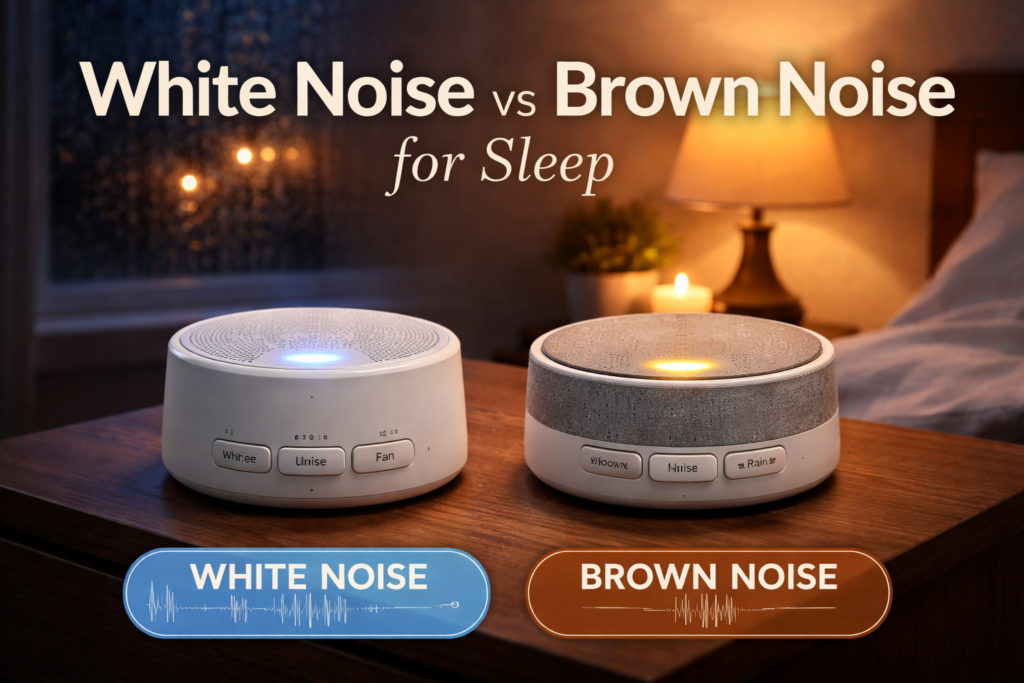
White noise and brown noise are both widely used to improve sleep, but they create different listening experiences.
Understanding how each sound works can help you choose the best option for your bedroom environment and personal sleep preferences.
What White Noise Sounds Like
White noise contains equal intensity across all audible frequencies, creating a consistent and balanced sound. Most people describe it as similar to soft television static, steady airflow, or the gentle hum of a fan running in the background.
Because white noise includes the full sound spectrum, it produces a uniform “shhh” sound that remains constant over time. This consistency is what makes it highly effective for sleep. Instead of allowing sudden noises—like traffic, voices, or doors closing—to stand out, white noise blends everything into a single, steady layer of sound.
This masking effect helps your brain stay relaxed and prevents disruptions that might otherwise wake you up during the night. For this reason, white noise is often recommended for light sleepers or those living in noisy environments.
Many people also use white noise for:
- Improving focus and concentration
- Reducing distractions in busy spaces
- Creating a stable sleep environment
What Brown Noise Sounds Like
Brown noise, sometimes called “deep noise,” emphasizes lower frequencies, giving it a richer and smoother sound compared to white noise. Instead of a sharp or hiss-like tone, brown noise has a deeper, more rumbling quality.
Listeners often compare brown noise to natural, powerful sounds such as distant thunder, a strong waterfall, heavy rainfall, or even the low roar of ocean surf. This low-frequency emphasis makes it feel warmer and more immersive.
Because brown noise lacks the higher-frequency sharpness found in white noise, many people find it more soothing and easier to listen to for extended periods—especially at night. It can create a cocoon-like effect that feels calming and grounding.
Brown noise is particularly useful for:
- Blocking deeper, low-frequency background sounds
- Promoting relaxation and stress reduction
- Supporting deeper, uninterrupted sleep
White Noise vs Brown Noise: Which Is Better?
Choosing between white noise and brown noise comes down to personal preference and your environment.
- White noise is better for masking a wide range of sounds, especially sharp or sudden noises
- Brown noise is better for creating a deeper, more calming atmosphere with less harshness
If white noise feels too sharp or artificial, brown noise is often the better option for sleep. The best approach is to try both and see which helps you relax faster and stay asleep longer.
How to test both options
Try each sound for several nights at a low volume and pay attention to how quickly you fall asleep and how rested you feel in the morning.
You may also find that combining either sound with rain or ocean ambience creates a more natural sleep atmosphere.
Conclusion
White noise and brown noise both support sleep by masking distractions and creating a steady sound environment.
Experimenting with both is the easiest way to find the audio style that suits your sleep routine best.
Related guides
About the Author
Jay Warrington is the founder of LunarZen Sleep, a website dedicated to calming sleep sounds and practical guides that help people fall asleep faster and enjoy deeper rest. Jay creates relaxing sound environments such as rain ambience, ocean waves, and gentle background soundscapes designed to reduce distractions and promote relaxation.
Through LunarZen Sleep and the LunarZen Sleep YouTube channel, Jay shares long-form sleep environments and helpful guides that help listeners build better bedtime routines and create peaceful nighttime environments.
Sleep Sounds, Tools and Guides for Better Rest
Rain Sound Mixer
Create your own rain sound environment designed to help you fall asleep naturally.
Sleep Timer
Sleep timer designed to help you create a distraction-free environment.
Sleep Guides
Sleep guides and practical tips to help you fall asleep faster and improve quality.