
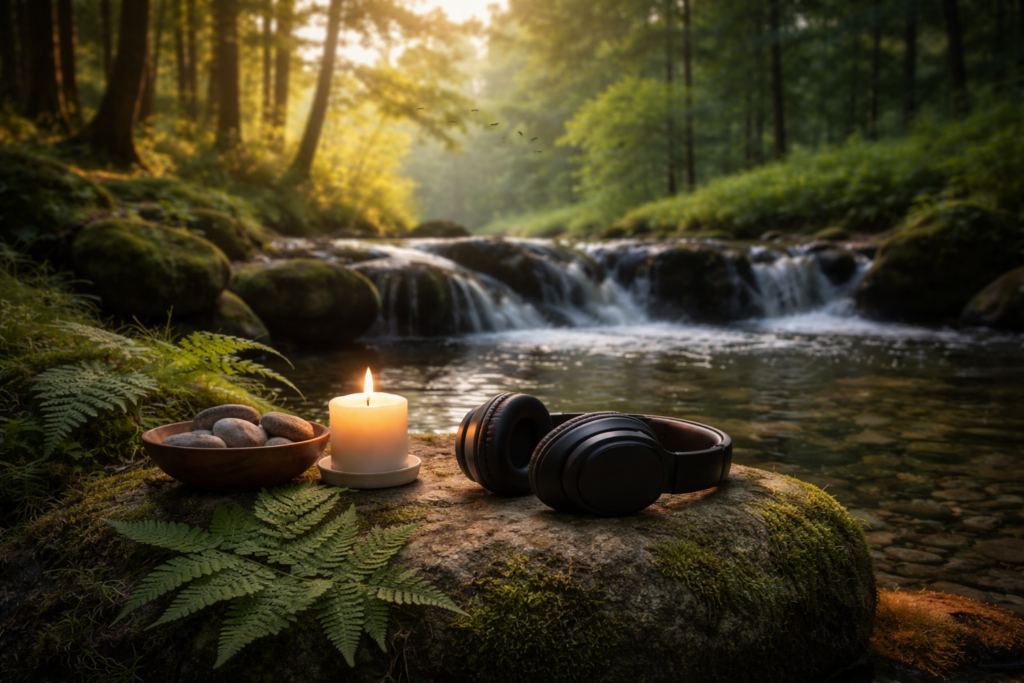
Natural sounds have a calming effect that many people notice almost immediately. Unlike harsh or irregular noise, nature-based soundscapes tend to follow gentle, flowing patterns that the brain interprets as safe and non-threatening. This sense of safety is important, because the brain is constantly scanning the environment for potential threats, even during rest. When sounds are soft, predictable, and natural, that alert system begins to quiet down.
Why the Brain Responds Well to Natural Rhythms
Rainfall, ocean waves, wind through trees, and distant thunder all contain soft repetition with subtle variation. These sounds are not perfectly uniform, but they are consistent enough to feel stable. This balance helps the brain relax without becoming bored or overstimulated. Natural rhythms often mirror biological patterns such as breathing and heart rate, which can gently guide the body into a more relaxed state. As a result, it becomes easier to shift from mental alertness into calmness and eventually into sleep.
How Natural Sounds Reduce Stress
A calm soundscape can significantly lower the sense of urgency created by modern environments. Constant notifications, traffic, and background noise can keep the brain in a heightened state of awareness. Natural sounds replace that chaos with something steady and reassuring. This reduces the production of stress hormones and helps the body move toward a more relaxed, parasympathetic state. Over time, regularly listening to calming audio like rain or ocean waves can train the brain to associate those sounds with relaxation and rest.
How Nature Sounds Mask Distractions
Urban environments are filled with unpredictable sounds such as passing cars, doors closing, voices, and electronic interruptions. These sudden changes can easily pull you out of a relaxed state or wake you during sleep. Natural ambience works by creating a consistent audio layer that softens or masks these disturbances. Instead of silence being interrupted by sharp noises, everything blends into a more stable and less disruptive background, allowing your mind to remain at ease.
Best Ways to Use Natural Sounds
Nature soundscapes can be used in a variety of situations where relaxation is needed. They are especially effective during bedtime, meditation, reading, or even while working in a high-distraction environment. For the best results, keep the volume low so the sound sits gently in the background rather than dominating your attention. Longer recordings are also beneficial, as they prevent interruptions and help maintain a consistent atmosphere throughout your rest period. Using the same sound regularly can further strengthen its calming effect, as your brain begins to associate it with relaxation.
Conclusion
Natural sounds help the brain relax because they feel familiar, steady, and safe. Their gentle patterns reduce stress, mask distractions, and support a smoother transition into rest. When used consistently, they can become a powerful tool for improving sleep quality and creating a calmer, more balanced daily routine.
Related guides
About the Author
Jay Warrington – Creator of LunarZen Sleep
Jay Warrington is the founder of LunarZen Sleep, a website dedicated to calming sleep sounds and practical guides that help people fall asleep faster and enjoy deeper rest. Jay creates relaxing sound environments such as rain ambience, ocean waves, and gentle background soundscapes designed to reduce distractions and promote relaxation.
Through LunarZen Sleep and the LunarZen Sleep YouTube channel, Jay shares long-form sleep environments and helpful guides that help listeners build better bedtime routines and create peaceful nighttime environments.