
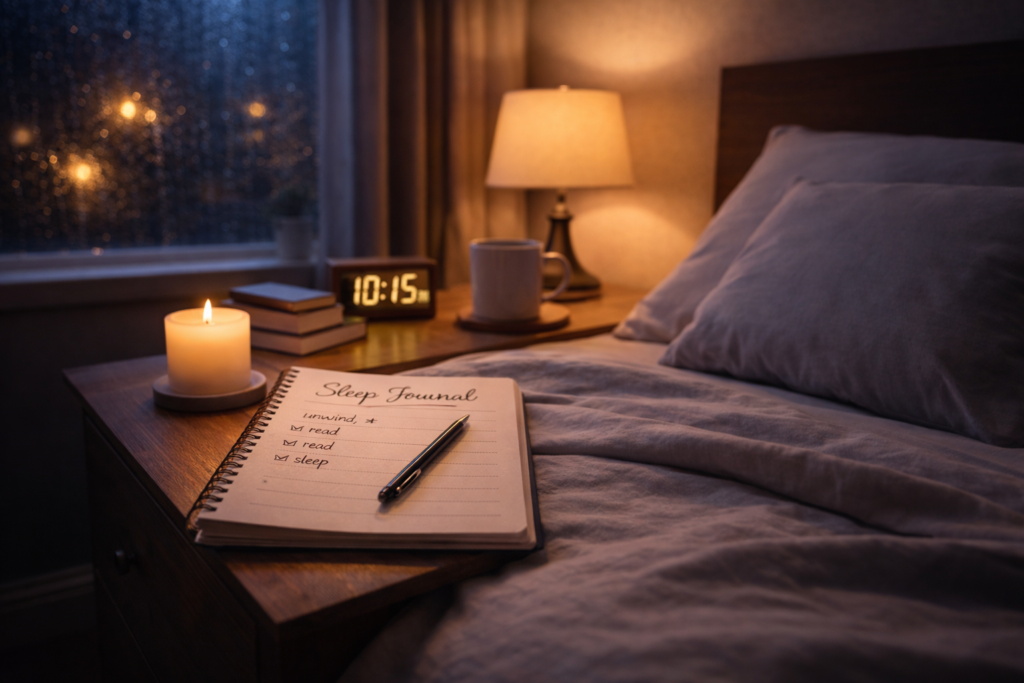
A consistent sleep routine is one of the most effective ways to improve overall sleep quality. When your bedtime follows a predictable pattern, your body begins to recognise the signals for rest and prepares for sleep more naturally.
Over time, this routine strengthens your internal clock (circadian rhythm), making it easier to fall asleep faster and wake up feeling more refreshed. Even small, consistent habits can have a noticeable impact on how deeply and how long you sleep.
Reduce Stimulation Before Bed
One of the most important steps in creating a better nighttime routine is reducing stimulation in the hour before sleep.
Modern devices such as phones, tablets, and televisions emit blue light, which can suppress melatonin—the hormone responsible for regulating sleep. When melatonin production is delayed, your body remains in a more alert state, making it harder to fall asleep.
To improve this:
- Turn off screens at least 30–60 minutes before bed
- Avoid stimulating content such as social media or intense shows
- Switch to calming activities that help the mind slow down
Creating a low-stimulation environment allows your brain to gradually transition from alertness to relaxation.
Use Lighting to Support Sleep
Lighting plays a major role in how your body interprets time of day. Bright, cool-toned lighting signals alertness, while soft, warm lighting encourages relaxation.
In the evening, adjusting your environment can help your body prepare for sleep more effectively:
- Use warm, dim lighting instead of bright overhead lights
- Add bedside lamps or ambient lighting
- Reduce harsh or direct light in the bedroom
This simple change can make your space feel calmer and more sleep-friendly, reinforcing the natural transition toward rest.
Add Calming Pre-Sleep Habits
Incorporating relaxing habits into your routine helps signal to your brain that it is time to wind down. These activities act as a mental “bridge” between the busyness of the day and the stillness needed for sleep.
Effective calming habits include:
- Reading a book (non-stimulating content)
- Light stretching or breathing exercises
- Drinking herbal tea (such as chamomile)
- Listening to gentle audio like rain sounds, ocean waves, or white noise
These small rituals can reduce stress, slow your heart rate, and make it easier to fall asleep naturally.
Stay Consistent With Your Schedule
Consistency is one of the most powerful factors in improving sleep. Going to bed and waking up at the same time each day helps regulate your circadian rhythm and trains your body to expect sleep at a certain time.
Key tips:
- Maintain a consistent sleep and wake time—even on weekends
- Avoid large variations in your schedule
- Focus on gradual improvements rather than perfection
When your body becomes accustomed to a routine, falling asleep becomes more automatic and less effortful.
Why Routine Matters for Deep Sleep
A structured nighttime routine doesn’t just help you fall asleep—it also improves the quality of your sleep cycles. When your body enters sleep in a relaxed state, you are more likely to experience deeper, more restorative sleep stages.
This leads to:
- Better recovery and energy levels
- Improved focus and mood
- Reduced nighttime awakenings
Conclusion
The best nighttime routine combines reduced stimulation, supportive lighting, calming habits, and a consistent schedule. These elements work together to create a smooth and natural transition into sleep.
By making small, intentional changes to your evening routine, you can significantly improve both how quickly you fall asleep and how well you stay asleep—leading to deeper, more restorative rest over time.
Related guides
About the Author
Jay Warrington – Creator of LunarZen Sleep
Jay is the founder of LunarZen Sleep, a website dedicated to calming sleep sounds and practical guides that help people fall asleep faster and enjoy deeper rest. Jay creates relaxing sound environments such as rain ambience, ocean waves, and gentle background soundscapes designed to reduce distractions and promote relaxation.
Through LunarZen Sleep and the LunarZen Sleep YouTube channel, Jay shares long-form sleep environments and helpful guides that help listeners build better bedtime routines and create peaceful nighttime environments.